
Helping children go back to school after lockdown: Part 2

|
In Part 2 of her guide, Dr Tricia Skuse, explores the many presentations of anxiety in children, how this relates to what parents and carers may be experiencing and how this can be understood in the context of worries about returning to school. |
What anxiety looks like
Anxiety has many presentations. Whilst the stereotypic image is of someone looking timid and frightened and talking about their worries, maybe being a bit tearful.
However, anxiety also has a number of other manifestations. Irritability is a common one. Children (and parents/carers) may have less patience and tolerance than normal. This can lead to frustrations and arguments. As hard as this is, it is important that adults are as mindful as possible about what may sit under their child's (and their own) snappiness and attitude may actually be heightened anxiety.
Others (children and adults) can also present as being bossy or controlling. For those who feel that things are out of their control, there can be a tendency to try and regain some sense of certainty by exerting control over things, events or other people.
Who's Worry is it Anyway?

One of the best places to start is to think about who is doing the worrying. By that I mean, trying to separate out what are your worries as the carer and what are the child's worries. These are likely to be quite different. However, unless the carer is mindful, it is very possible for some of the parent's worries to be transmitted over to the child. For example, a child might be more concerned about being back in class sitting next to a child they don't really like, or the fact that are back in school but their brother isn't. Whilst parents might be more worried about whether their child is a risk of picking up the virus from the group setting and bringing it back home and either being ill themselves or passing it to other more vulnerable members of the family. Other parents may be feeling anxious that the family time they had during lockdown is coming to an end and the stress and demands of normal life will soon be slowly creeping in.
There is a potential problem here. Children are not immune to the atmosphere within the home, they are not deaf to the discussions going on between parents or on the phone or to the media coverage. They may not get the reason behind things correct but they are very astute at picking up the feeling. So, they may not be able to tell you exactly what has been happening at a political/teachers union level but many children will know that there are concerns about how safe it is for them to go back to school. At the very least they will have picked up that there is a level of anxiety surrounding going back to school.

The point is this: unless carers are honest with themselves about what they are anxious about, this anxiety can be passed to children. This leaves the child not only worrying about the person they are sitting next to in school and the fact that their brother is going to have more fun at home, but they may also start to worry about whether they are safe and whether their parents or carers are safe. This is particularly key for primary aged children as worries about illness, dying and the possibility of parents/carers dying are common concerns during development.
Common Anxieties About Going Back to School
The prospect of going back to school is likely to have different impacts on different age groups. The Reception/Year 1 children are at a different stage of development and understanding from those in Year 6. Consequently, the fears and anxieties they may have about returning to school will be different. And, whilst the principles may be similar, the strategies for intervention may be different.
Children's Anxieties - Reception/Year 1
Separation
Some reception and Year 1 children will sail through the process of going back to school. They may have exhausted the games and activities they have at home and may really enjoy the opportunity to play with other children again.
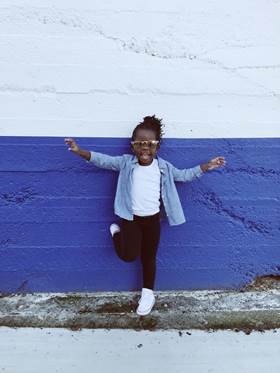
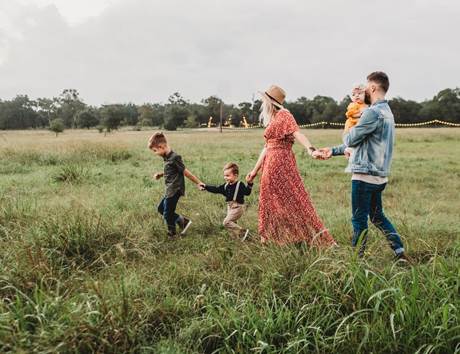
Others may find it more difficult. They have had a couple of months of being at home. The most important thing we can give our children is our time and attention. Many parents have been furloughed or are homeworking which means they are around at home as well and there has been more time for playing, baking, cuddling, talking, going out for walks, etc. Fantastic stuff to be doing with children and maybe the longest period ever families have had to do these things together. To leave this to go back to school will be hard for some. The anxiety around being separated from parents/carers may be intense.
Difficulties returning to school may be particularly acute for children who struggled with the transition to school when they first started. Parents who managed to get through this may be dreading the possibility of having to do this again. The important thing to remember is that it is not a given that your child will struggle again. And there are a number of strategies that you can use to help - see below.
 Children
in the looked after system who come from backgrounds of early neglect and abuse may also need extra support. At TRM Academy we have links with a number of foster care agencies and residential homes and it is becoming apparent that some children
are thriving in lockdown because they have had the opportunity to have what they need - a chance to develop a secure base, build trust, learn about relationships, develop language skills, learn emotional regulation skills, play and generally make
up for things they missed out on when they were younger. This time will serve them well. But it may mean that the transition back to school and away from this security is not easy. Some may just not be ready yet. Many families
may be feeling this way - just not ready for it to end yet.
Children's Anxieties - Year 6
Change
In my clinical experience the worries about transition start early - often towards the end of Year 5 - and then continue throughout Year 6. Regardless of how much preparation and support children get, it can be a really anxious time for children even in the best of circumstances.
It is easy to underestimate the amount of stress Year 6 children feel about the transition to secondary school. Yes, it should be a year of being at the top of the school, having more grown up responsibilities within school, going on residential trips, having a leaving party, and a time of really close friendships. But is also a time of great uncertainty for children. The prospect of leaving the small, predictable safety of their primary school to the uncertainty of entering a large secondary is ever present. The step to secondary school is massive. Overnight children go from being in the same classroom, with the same pupils and the same teacher to a significantly bigger school, lots of different pupils, lots of different subjects, lots of different classrooms and lots of different rules and where they are at the 'bottom' of the school. Moreover, the expectations placed upon children are hugely different: there is homework, new subjects, the possibility of detention, new ways of getting to school, lots of new classrooms to find the way to, new social groups to establish, new bullies to deal with.
For Year 6 children this year, they have had little, if any, of the preparation schools commonly put in place for the transition to Year 7. No visits to the new school, no visits to their school from secondary teachers or pupils, no residential trips with children transitioning from other primaries. And, so far, no closure either - no leaving assembly, no planning for a leavers party, no summer fayre.
Essentially, many Year 6 children will have had all of the worry but without any of the preparation that helps to reduce the worry. And certainly, none of the fun that comes with being in Year 6. For some, lockdown will have served as an opportunity to avoid thinking about it - they can be at home where they feel safe and not have the constant reminder that they will be leaving their school soon. For others, the worries may have been bubbling about quietly on the back burner. Either way, it is important that schools and parents do as much as they can to support children with the transition.
Fear of missing out
Some children will also be frustrated that they are having to go to school but their brothers and sisters are not. "Why do they get to stay at home and play games, watch TV and I have to go to school? It's not fair!" may be the phrase echoing round homes the night before. Often this may not be about not liking school, or not wanting to go to school. Rather, it is connected to the concern that their siblings are getting something that they are not.
Anxieties about illness
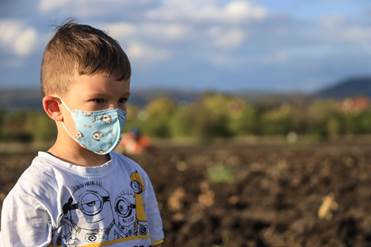
Some children may worry about catching the virus if they return to school. Or may worry that their parents may catch the virus.
Children who have experienced a recent death within the family, due to coronavirus or because of other reasons, may feel particularly anxious. During the primary years children's understanding about death changes. Commonly children begin to understand the universality, permanence and inevitability of death at around age 7. Children younger than this may still be affected by a death but it will be more dependent upon how the loss is managed within the household. Older children will feel the loss more personally.
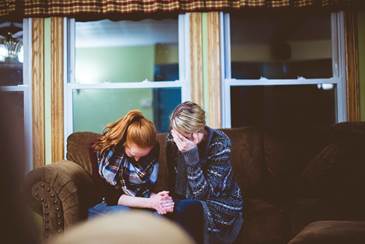
Supporting children through bereavement is beyond the scope of this guidance but it is important that schools are aware if there has been a bereavement within the family so that the school can ensure additional supports are in place if needed. It is important to bear in mind that some children may find being away from the security of home difficult and it may heighten anxieties that they may lose someone else. Others may welcome the distraction and the opportunity to be away from the grief and the grieving. Just as with anyone who has suffered a loss, there is no right way to grieve. Healing takes time and just because someone doesn't talk about it doesn't necessarily mean they are not feeling it.
Bullying

Bullying is unfortunately a common occurrence within schools, even primary schools. The success, ability and robustness of anti-bullying responses from schools can be variable. It is possible that some children may be dreading going back to school because they do not want to be back in a situation where they are bullied again. They may have enjoyed the respite of being away from it.
If this is a problem for your child, it is essential that they are encouraged to talk about what is happening and that the school is notified. A partnership approach between home and school is often the most successful and has the added bonus of giving the child the message that adults are there to help them, and that adults can help keep them safe.
It's going to be different
Some children may also be a bit uncertain because their normal routine is different. Schools are being encouraged to stagger start times and have different groups of children in on different days. Class sizes are to be restricted to 15 and children are not permitted to sit right next to each other. This means that classrooms will look different. Break times and lunchtimes are also likely to be managed differently from how they used to be. Teachers are clearly mindful that primary children will struggle to do social distancing, especially the younger ones but they will feel the pressure to try and keep children and themselves as safe as possible. This is going to be stressful for teachers.
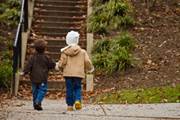
Children of all ages will find social distancing hard. They want to be close to their friends, they will want to sit by them, they will want to hug them. It is easy to see a situation where teachers' patience is wearing thin by the end of the day after reminding the children to keep 2m away from each other every few minutes. This obviously increases the possibility that some children may experience the return to school as one where their teacher is always cross with them.
It is important to remember that home routine is also likely to be different. Some children may be remaining at home. Parents/carers may also be working from home rather than dropping the child off to school en route to work. Grandparents may not be picking children up after school.
It will take time for everyone to adjust to another new normal.
Parents' fears
The initial fears that parents and carers have about children returning to school are likely to be very different, at least in the beginning. Concerns about safety are likely to be very high on the agenda.
- Will my child be safe?
- Will the teacher be safe?
- What is the risk of my child picking up coronavirus and bringing it home and transmitting it to other members of the family?
- If my child does acquire the virus how badly might they be
- affected?
- What will happen if they, as parents or carers, become ill? Who will look after everyone?
Other parents may struggle with the logistics of getting some children to school, having others at home, managing home-schooling, home-working with the various drop-off and pick-ups. Parents who normally relied on grandparents to do some of the transportation may feel that their lives have just become too complicated.
Parents/carers may also be reluctant to return to the stress and chaos of pre-COVID life. Lockdown has provided many families with the opportunities to be together over extended periods. Whilst few would argue that this is not without its challenges, the chance to spend time with their children has been a luxury. For many of us, this is going to be hard to give up. It is important to be honest with oneself about this. Firstly, because doing so allows one to think about what actions need to be taken to prioritise family life going forward. Secondly, not recognising it risks confusing a reluctance to return a child to school with other things e.g. safety concerns. If this happens there is a possibility that a child incorrectly picks up on the safety issues and then feels scared to return to school.
| Part 1 | In the Part 3 of this guide, Tricia sets out strategies to help reduce anxiety for children returning to school... | Part 3 |