
Helping children go back to school after lockdown: Part 3

|
In Part 3 of her guide, Dr Tricia Skuse, looks at practical strategies for parents and carers to help reduce children's anxieties about returning to school and makes recommendations for books and resources that can be useful. |
Strategies to help
Talking about it
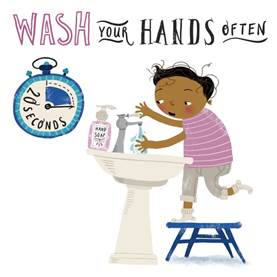
It is always helpful for parents and carers to try to talk with their children.
Phrases to use
"I wonder" can be a useful start to a lot of sentences. It avoids things feeling like an interrogation:
- I wonder what it feels like to go back to school?
- I wonder how the classroom is going to look?
- I wonder what you will do on your first day back?
- I wonder how other children feel about going back to school?
"Wow!" is also useful as it draws attention to things children can be interested in.
- Wow! - look at that, all your tables are in different places
- Wow! - there are only 15 children in your class. How cool is that?
- Wow! You are only in school on Mondays and Wednesday so, you have two days with Mrs Jones in School and then we get 3 days at home all together. What shall we on those days?!
As you know, empathy is key to parenting. No more so than when children are worrying and feeling anxious. It never helps us when our worries are dismissed as not important. Neither does it help children. Letting your child know you have heard their worry and acknowledge how big it is for them goes a long way in actually managing the worry.
For example: words to the effect of "Wow, you are 6 years old and you are worrying about catching the virus. That's a pretty big worry. I am sorry you are feeling so worried about that. Tell me more about how that feels". "Shall we try to think of some things that we can do stop that happening?" "First of all what things do you think everyone can to do help stop the virus spreading?" "Second, everyone worries sometimes, can you think of things that might be good way to help you stop worrying?"
Build up to going back: preparation is key
It can be very helpful to break the return to school into stages for children. The overall prospect can feel overwhelming for children but doing it in stages can be a gentler introduction.
As clearly indicated by Neil Davies and Wendy Steer in their children's book "Harry the Hound Returns to School", stages may include:
- Taking a drive or a walk past the school to help introduce the idea of school. Following the route that children would normally take to school may be helpful. A gentle, incidental conversation about what things used to happen at school, how nice it will be to see friends, what their teacher is like etc. may also help.
- For children who wear school uniform, getting children to try it on can be really useful. Not only does this allow parents/carers to check to see if it still fits but psychologically it can help children to step back into the role of being a school child. Making this a fun activity, being playful, being amazed at how much the child has grown (children like to know that they are growing taller) can all make the notion of getting into the 'school zone' more tolerable.
- Parents and carers can also help orientate children towards school by helping them dig out their school bag, get all their pens, pencils and books together. Talking about what snacks they would like to take to school or what they would like in their packed lunch. Each little thing, done over a number of days prior to the return to school will gradually help children get used to the idea of going back to school.

- Older children may benefit from talking or video-calling friends beforehand. Not knowing whether your friends are wearing a skirt or summer dress, or shorts or long trousers may seem trivial but can be big sources of worry for children. Eliminating as many of these easily managed worries as possible will just make life simpler. Arranging to meet friends at the gate before school may be appropriate providing social distancing requirements can be managed. Having a friend to walk into school with often makes the separation from parents/carers easier, for both child and adult.
- It is important to remember that children vary in their understanding of time and of the days of the week. For younger children the likely reality of only being in school on certain days may be confusing. Simply telling them you are in school on Tuesdays and Thursdays, is only meaningful if you know the days of the week and know them in the correct order. Commonly children have an understanding of past, present and future by around age 5. This doesn't mean that they will know their days of the week. This doesn't come until much later. Most Year 6 children will be able to do this, although it is essential to remember that children who have missed large periods of school in the past or who come from complex backgrounds where informal education has been compromised because of parental substance misuse, domestic violence, serious mental illness or abuse or neglect may not have yet developed these skills.

Having a calendar at child height, with the days children are in school clearly marked on it and a habit of crossing off each day before bed can be a helpful introduction. This can then give the child a sense of autonomy and independence.
If they are uncertain about whether they are in school the next day, they can just go and check the calendar rather than having to rely on mum or dad to tell them.
Similarly, a visual timetable detailing the jobs they have to do in the morning (getting dress, brushing hair, cleaning teeth etc.) can help children get back into the school routine. Younger children or children who struggle with literacy may need a pictorial timetable - i.e. pictures of clothes, hairbrush and toothbrush.
Children who can't sleep:
Children worry when they can't sleep. They worry about what they are worrying about and they worry about being the only one awake in the house. There is so much I could say about sleep and strategies to help children sleep but it is beyond the remit of this short guide. However, here are a couple of strategies that might be useful.
Routine
Most of us have probably let normal bedtimes slip over the course of the pandemic. They are going to bed later and are getting up later. Normal disciplines around screen time have become more flexible and the usual bedtime routines are almost distant memories. If your child has difficulties sleeping routine is your friend. Having a routine around preparing for bed cues your child's body up for sleep. For example:
- Bath or shower
- PJs on
- Warm milk to drink
- Brush teeth
- Cuddle or chat with mum or dad
- Read to themselves or have story read to them
- Lights out
The addition of certain smells (e.g. lavender) only to be used at bedtime can also be helpful as it helps cue the body for sleep. It doesn't really need saying but I will - a bedtime routine is exactly that - a routine. This means that it happens every night.
Getting the worry out is key.
We all struggle to sleep if we have a worry we keep thinking about. It can be useful for all of us to learn how to manage the chattering monkeys in our heads. I find it useful to make a list of things before I go to bed, then tell myself I can't do anything about any of them now. The only thing I have to remember is where I have put the list. In effect it narrows my tasks down to 1. We can do a similar thing with children, although in my experience it is best done in stages depending on the age of the child.

Getting the worry out is important for children too. Get them to draw their worry or write it down. Ask the child to tell you about their picture or talk more about what they have written. This helps get the worry out of their head. Sometimes this is enough. For other children who worry a lot, it can be useful to have a set time of day when you do this. The evening can be useful as it helps children feel they have a dedicated slot where they can empty out their worries and then settle down to sleep. As a strategy it is, of course, only as good as the adults delivering it. Adults need to be prepared to consistently make the time available to their child.
With older children an extension of this is to suggest that if they have worries over the day, they write them down, put them in a Worry Box and then use this dedicated time slot to talk about each of them. As children become more confident that you are there to help you may wish to suggest that they choose their top 3 worries to talk about. This not only keeps the time spent more contained but also teaches children about prioritisation. The final extension to be done weeks later, is to
reflect on how all the other worries in the Worry Box, the ones that weren't talked about, just went away by themselves. There is no need to go over them and review them, just mention how they aren't worries any more. Ask the child what they want to do with these pieces of paper now - keep them or throw them away? Leave it up to the child to decide. They will throw them away when they are ready.
Reassurance:
It can be tempting to say "Don't worry" to an anxious child and work on the assumption that this will be enough to stop them worrying. But when was the last time you were able to do that when someone said "don't worry" to you? It's not that easy is it?
For older primary/early secondary aged children a useful alternative can be to enlist the help of a hero figure. Simply ask your child to identify someone they like and aspire to be - someone who is confident, always knows what to do, and who is brave and successful. It doesn't matter who it is - a footballer, film star, pop star, relative, etc. If your child is worried about walking back into school get them to think about what their hero figure might do and say in that situation. For example, what positive message might Ronaldo say to himself as he walks up to take a penalty in a cup final? Usually children are able to recognise that their hero would say something positive to themselves "Go on, you can do this. Focus and concentrate. Be brave," etc. Once your child has identified what their hero says, get them to think about having their hero say that to them as they walk back into school. Practice this a few times, at first out loud and then in their own heads. Helping children learn a strategy like this teaches them a tool that they can use in lots of different situations. It's very different from simply telling them not to worry.
Sensory reminders:

For children who are anxious about leaving their parents or carers the introduction of a sensory reminder can be really helpful.
A sensory reminder is an object that helps a child stay connected with their main secure base, usually a parent or carer. Many children will go off happily to school knowing that they have a photo of mum and dad in their bag, or a keyring from home on their pencil case. Having something tangible to touch can when they need it can be very comforting. It doesn't have to be an object. Children can be very sensitive to smell. The smell of mum's perfume on a tissue in their pocket or their uniform smelling of home can also be soothing. Younger children may want to take their favourite teddy to school. Sensible schools will realise that this also serves as a wonderful opportunity for children to talk, through their teddy, about what lockdown was like, or what their worries were about coming back to school. Children who are reluctant to talk will often do so indirectly, through another medium. Teddies are great for this.
Greeting kids when they get home

Regardless of the age of the child it is really important that parents and carers make special efforts to reconnect with their child when they come home from school. It can be really tempting to just finish that text, get to the end of that bit of work, get some food ready, etc. I can't emphasise enough how important it is to resist the temptation to do these things before reconnecting with the child. The child needs to get the message that you are pleased to see them, enjoy them and have time for them. Undivided attention is especially important if other siblings have been at home with you all day.
Things to look forward to.
Having something to look forward to may also be helpful to keep children positive. A family film/curry/pizza night. Or a game in the park at the weekend or after school will help give children the message that they are not missing out on all the fun by going back to school.
Year 6 children
Whilst all of the above strategies can be useful to all year groups, Year 6 children may need some particular consideration.
As indicated, this year's Year 6 have missed out on a lot of the preparation for moving to a senior school and also the closures of leaving primary. Some children will be feeling increasingly anxious about moving onto Year 7. This anxiety may well increase following the return to school for the final term as it necessarily comes back into focus.
Concerns children may have include:
- Friendships . Will I lose my existing friends when I go to my new school? Will I make new friends? Will my existing friends make new friends and leave me behind? Will people like me?
- Bullying . Will I get bullied? What do I do if I get bullied?
- Getting to school. In my personal experience there is a lot of unnecessary angst about buses - am I going to be on the same bus as my friend? Where does the bus go from? Where do I get off the bus? What time does the bus go? How will I know which bus to get on to come home? Ordinarily some of these are easier to resolve than others. Often education authorities cannot specify who is on which bus until a few days before the start of term when they know exactly who needs transport. This year, with social distancing restrictions, it is likely that there will be even more uncertainty.
- School work. Will I be able to do the work? What happens if I can't? Will I have detentions if I can't do the work? Will there be a lot of homework? Will I be able to do it? Is there anyone to help me?
- After school. What happens after school? Will anybody be at home when I get home.
Again, preparation is key. Parents and carers can do a lot to help children prepare and orientate children to the transition. Things to try might include:
- Driving by the new school together
- Looking at the school prospectus, highlighting all the different activities that are on offer. Talking about the things the child might like to do. Of course, it is unclear at the moment exactly what will be possible. In COVID terms September is a long way off. But we are not endeavouring to sign children up here - rather just orientate them towards going to school and help them feel more positive about it.
- It is important to make time to talk with your child about the transition ahead of them. Talk about what it was like for you when you moved school. Knowing that you had worries but have survived them is helpful for children.
- Talking about how the child will be getting to school. What the plan is if they miss the bus. Reassure them that they won't get into trouble if they miss the bus.
- New school uniform. This is tricky. Uniforms are expensive and nobody wants to buy too early only to have their child grow out of it before September, especially in the current climate where finances may be especially short. However, having the uniform in advance can be a really helpful way to help orientate a child towards their future. Speaking from personal experience, I was amazed by the degree to which just putting on the uniform from the new school helped my daughter embody her new self and feel that she no longer went to that school (primary) but rather she belonged to this school (secondary). The transformation was almost instant. We complimented her on how she looked and took photographs and she never really looked back. Of course, this won't be the same for all children, but as with all these strategies, it is a matter of finding the ones that work for your child.
Closure and honouring time spent at primary school
Given that many Year 6 children will have limited time to work towards a closure of their primary years, any efforts to mark this are welcome. There will be marked national differences in the time available for this through the school route. Some schools may be able to have final assemblies or End of Primary activities, other may not.
The point to bear in mind here, is that these events are not just about children enjoying themselves. They are rituals that help bring closure and an end to things. They are part of the goodbye and as such help children move forward.
If your child is not able to take part in these events, either because the schools are not back or because they are not in school because of safety concerns, you can still do things to help.
- Making a photo album of your child's years in primary. Trawl through your phone and print off as many pictures as you are able, put them in an album together with any certificates, badges and records from school you have.
- Many schools have a parents' WhatsApp group or similar. Share ideas and materials with other parents, even if it is just a few parents from your child's friendship group
- Have a virtual sleepover/film night/games night, etc. to mark the end of term.
- Start a secondary school scrapbook where information and pictures of the new school are held.
Special consideration for Year 6 girls
One thing to bear in mind if you are the carer of a Year 6 girl is the issue of puberty and the onset of periods. Parents often tell me that Year 6 and into Year 7 is a difficult year. Many parents feel frustrated by their daughter's increasing moodiness and poor attitude. There may be a number of different reasons for this, one of which is the changing hormones that precede menarche (commencement of periods). In the UK most girls start their periods between the ages of 10 and 16. The average age is 12, although some girls can start as young as 8. Whilst the strops and the moods can be frustrating, it can be helpful to bear in mind that it may be hormonal and largely out of your child's conscious control. If you suspect that it may be hormone related, plot the moods on a calendar as this may help things become more predictable. Overall, be gentle. It is hard being 11 and 12. They do have a lot to be making sense of and they need you to walk with them through it.
Disclosures

There is evidence to suggest that rates of domestic violence have increased during the past few month and there are likely to be children within these homes.
Professionals should be mindful of the increased chance of disclosure from the children they are working with.
The TRM Academy book on working with children who disclosure provides information about how best to support them.
You don't have to be perfect
It is hard being a parent at the best of times. Parenting through lockdown can be a real challenge, especially if you have had caring responsibilities for others outside the home, or if you are juggling it all on your own with limited resources and/or have lost loved ones. None of us are perfect parents. We are all just muddling along as best we can. The knowledge that they are loved and cared about is the greatest gift we can give our children. A few minutes where they have our undivided attention is priceless. And sometimes that is all we can do.
It is also important that you take care of you too. Managing the stress of caring for child(ren) doesn't come easily. It is something we learn how to do. And even then, most of us need reminders on how to do it well. Jonny Matthew's book and our online course "Looking After No. 1" provides useful tips on how to avoid getting burned out and how to take better care of ourselves.
Resources
Aimed at age 6-11 year-olds
Neil Davies & Wendy Steer (2020) Harry the Hound Returns to School. Part picture book, part workbook. The worksheet can be used with children of all aged who may be nervous about returning to school.
Early primary
Ironside, V. (1996) The Huge Bag of Worries. Hodder Children's Books, London - A great book to read with younger children who are prone to worrying a lot.
Year 6 Girls
Holyoke N. (2018) Drama, Rumors & Secrets: Staying True to Yourself in Changing Times. American Girl Publishing.
Woodburn J. & Holyoake N. (2018) Worry: How to feel less stressed and have more fun. American Girl Publishing.
For parents and carers
Matthew, J. (2016) Looking After No.1: Self-Care for People Working with Troubled Children. Also available as an Online Course.
Matthew, J. (2019) What to do When Children Disclose
Some of the links above allow you to purchase books and resources. TRM Academy receives a small affiliate payment should you purchase.
| Part 1 Part 2 |